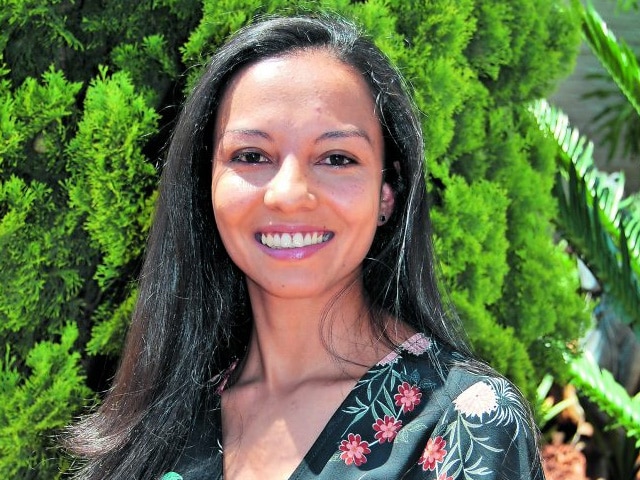
Nicole De Wet

Associate Professor University of the Witwatersrand
South Africa Cohort 1

Profile AI

Dr. Nicole De Wet, has a PhD degree in Demography and Population Studies from the University of the Witwatersrand (South Africa). She is currently a Senior Lecturer and Head of the Demography and Population Studies programme at the University of the Witwatersrand. She is a CARTA PhD, University of Michigan African Presidential Scholars Programme (UMAPS) and WZB Social Science Research Person. She is the coordinator of the Masters programme in Demography and Population Studies. Dr. De Wet is the recipient of two Andrew Mellon Grants, a National Research Foundation Thuthuka Post-Doctoral Grant, a National Institute for the Humanities and Social Sciences Grant, a British Academy Newton Foundation Grant and a co- awardee of an NRF/DST Center of Excellence in Human Development and a US National Institute of Health MRC grant. She was also the first runner up in this year’s DST Women in Science Awards. She is collaborating on research with the University of Southampton, the University of Hong Kong, the University of Michigan, Obafemi Awolowo University, Nigeria; Federal University Oye-Ekiti and the University of Johannesburg. She has taught numerous undergraduate and postgraduate courses and is currently teaching Statistics for Demographic Survey and Analysis and Population Studies and is currently supervising eight Masters students. She has over 15 publications in ISI and IBSS accredited journals and book chapters and more than 22 national and international conference presentations. In October she will be taking up a 3 month research stay in Berlin, Germany, where she will be looking at the economic determinants of family formation among youth in South Africa. Her other research interests are in the fields of health and mortality. She is currently studying the health and mortality outcomes of adolescents in Southern Africa.

Program Impact AI

The program appears to have supported a modest increase in the author’s research output during enrollment compared with the pre-program period, suggesting some positive effect on productivity while they were in training. Because graduation was in 2013 and the post-graduation period is long complete, the much larger later publication record likely reflects broader career development beyond the program itself rather than the program’s immediate impact alone.

Latest publications

Most recent scholarly works and contributions.

Loading publications…