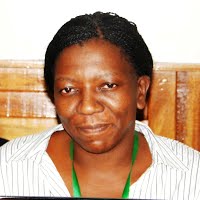
Esnat Chirwa

Specialist Statistician South Africa Medical Research Council
Malawi Cohort 1

Profile AI

Esnat Dorothy Chirwa is a Senior Biostatistician with the South Africa Medical Research Council (SAMRC), based in the Developmental Pathways for Health and Disease Research Unit (DPHRU) at the University of the Witwatersrand (Wits). In this role, she provides statistical leadership and analytical support for field-based health research, applying the principles of mathematical sciences to complex health data collected in real-world settings. Her work sits at the intersection of field-oriented health research and mathematical sciences. She focuses on study design, rigorous data analysis, and the application of quantitative methods to understand developmental pathways for health and disease. Through collaborative engagement with multidisciplinary teams, she translates statistical findings into actionable insights that inform public health practice and policy. Core expertise includes designing and analyzing field studies, applying robust statistical methods to health data, data management and quality assurance, and providing consultative support to researchers across projects. Her research interests emphasize field-based health research, the advancement of mathematical sciences in health contexts, and capacity building within the research community to enhance methodological rigor and reproducibility. Academic background is grounded in biostatistics and mathematical sciences, with a professional focus on applying quantitative approaches to real-world health challenges. She works across SAMRC and DPHRU Wits to foster cross-disciplinary collaboration, methodological innovation, and the development of statistical capacity within the unit. Esnat Dorothy Chirwa’s contributions center on delivering statistical leadership for field studies, ensuring robust design and analysis, and mentoring colleagues to strengthen the quality and impact of health research. Her work exemplifies the vital role of biostatistics in translating field observations into evidence-based health improvements, and she remains dedicated to advancing the discipline through collaborative practice and ongoing professional development.

Program Impact AI

The program appears to have coincided with a clear increase in the author’s research activity, with a stronger publication pace during enrollment than in the pre-program period. Because graduation was several years ago, the much larger body of work afterward suggests the program may have helped build momentum that supported sustained productivity beyond completion.

Latest publications

Most recent scholarly works and contributions.

Loading publications…