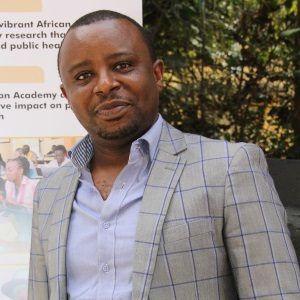
Faustin Ntirenganya

Associate Professor of Surgery and Head of Department of Surgery University of Rwanda
Rwanda Cohort 8

Profile AI

Dr Ntirenganya Faustin is a consultant General, Oncoplastic and Breast surgeon at the University Teaching Hospital of Kigali. He is Associate Professor of Surgery and Head of the Department of Surgery at the School of Medicine and Pharmacy, College of Medicine and Health Sciences, University of Rwanda. He obtained his Doctor of Medicine degree at the National University of Rwanda, where he completed his general surgery residency before pursuing breast, oncoplastic and reconstructive surgery at Université Paris IX, France. He also completed a Scholarship in Plastic Surgery at the College of Surgeons of East, Central and Southern Africa. Dr Ntirenganya intends to become a top leader in academia, a distinguished researcher, an excellent surgeon, and a top-level breast cancer specialist. Above all, he aims to be an excellent father and a highly regarded husband. Dr Ntirenganya has published papers in local, regional and international peer-reviewed journals, and has participated in and presented papers at a good number of international conferences. He is a winner of the 2010 ASGBHeSurgical Foundation Award and the 2013 MammadHeSoudavar Travelling Scholarship Award; he is engaged in global surgery and strives for universal access to quality health care, including providing access to high-quality surgical services to the poor. Dr Ntirenganya is a CARTA PhD person, cohort 8, interested in cancer research. He is working on breast cancer molecular markers and their influence on clinical presentation, progression and outcomes in young African women. Other research interests include: global surgery, breast cancer, plastic and reconstructive surgery, and medical/surgical education.

Program Impact AI

The program appears to have coincided with a marked increase in the author’s research output, with a much denser publication record during the enrollment period than before it. Because graduation was in 2023, the post-graduation period is still relatively recent, so the clearest takeaway is the strong productivity boost during the program rather than any firm conclusion about longer-term output afterward.

Latest publications

Most recent scholarly works and contributions.

Loading publications…