
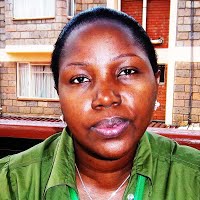
Victoria Mwakalinga

Lecturer Ifakara Health Institute
Tanzania Cohort 1

Profile AI

Victoria Mathew Mwakalinga Chuma is a Lecturer in the Department of Urban and Regional Planning at ArthHeUniversity, within the School of Spatial Planning and Social Sciences. She advances an interdisciplinary agenda that sits at the crossroads of urban planning and biomedical and environmental sciences, grounded in field-based research that examines how urban environments shape health and environmental quality. Her work emphasizes the practical translation of findings into planning practice, policy development, and community well-being. Her profile reflects a broad, integrative approach rather than a single specialization. Victoria’s research engages field-based investigations at the interface of urban design, environmental health, and population well-being. She explores how exposure to environmental hazards, urban ecosystems, and social determinants influence health outcomes in cities, with an emphasis on informing healthier, more sustainable urban development, resilience, and environmental justice. In the classroom, Victoria teaches courses related to urban planning, environmental health, and field methods, mentoring students in research design and data collection. She collaborates with interdisciplinary teams across science, planning, and policy sectors, contributing to projects that combine spatial analysis, health data, and environmental assessment. Her scholarly contributions are disseminated through conferences and peer-reviewed outlets, reflecting a commitment to bridging knowledge and practice. Beyond teaching and research, Victoria enjoys engaging with local communities and policymakers to ensure that urban planning decisions are informed by robust evidence and aligned with public health and environmental stewardship. She remains dedicated to expanding field-based research that informs equitable, evidence-based urban planning and the creation of healthier, more sustainable urban environments.

Program Impact AI

The program appears to have had a strong positive impact on this author’s research productivity, with no publications before enrollment and a clear pattern of sustained publishing during the program. Publication activity continued after graduation as well, suggesting the program may have helped establish an enduring research trajectory rather than only a short-term boost.

Latest publications

Most recent scholarly works and contributions.

Loading publications…