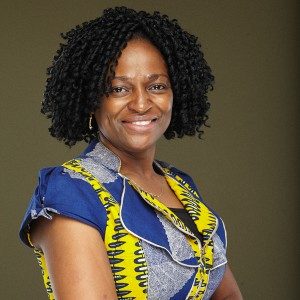
Macellina Ijadunola

Associate Professor Obafemi Awolowo University
Nigeria Cohort 6

Profile AI

Heam is a Public Health Physician and Senior Lecturer at Obafemi Awolowo University (OAU), Ile-Ife, Nigeria. Recently, he was awarded the Consortium for Advanced Training in Africa (CARTA) Doctoral Scholarship for 2015/2016. He obtained a Bachelor of Medicine and Bachelor of Surgery (MBChB) degree from OAU, Ile-Ife, in 2000. In 2003, he was awarded a scholarship to pursue a Master of Public Health (MPH) degree by the Population & Reproductive Health Program (PRHP) of OAU, in collaboration with the Bill & Melinda Gates Institute for PRHP and the Johns Hopkins University (JHU) Baltimore Partnership Program. He completed his MPH in 2006. Thereafter, he proceeded to residency training in Public Health and became board certified in 2010, having been awarded the Scholarship of the West African College of Physicians in Public Health. During his graduate studies, his research interest focused on reproductive health, and he has published extensively in the field, including his MPH dissertation on "Male Involvement in Family Planning in Ile-Ife." Upon completion of his residency training in 2011, he opted for a career in academia. As a lecturer in the Department of Community Health of the College of Health Sciences at OAU, his work involves teaching and mentoring undergraduate and graduate students and various cadres of in-service health workers, as well as research and community service. He is also OAU's Faculty Representative to Unilever Nigeria PLC. In that capacity, he recruits campus ambassadors from OAU for Unilever. His career goal is to become a distinguished academic and public health expert of national and global repute, contributing his quota to solving the many health and development problems of contemporary times through cutting-edge research, community-relevant services, and mentoring of various categories of students.

Program Impact AI

During the program, the author continued publishing but at a somewhat more modest pace than in the pre-enrollment period, suggesting the program may have shifted some effort toward training and research development rather than immediate output. The larger body of work appearing after graduation is consistent with the expected publication lag and may reflect research initiated during the program, so it should not be read as a direct measure of post-graduation productivity alone.

Latest publications

Most recent scholarly works and contributions.

Loading publications…