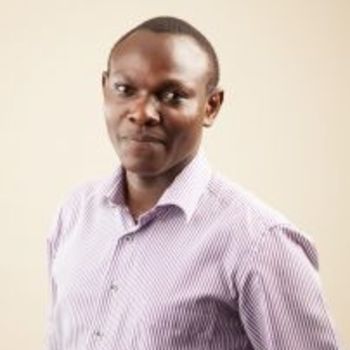
Emmanuel Kaindoa

Deputy Head of Department Ifakara Health Institute
Tanzania Cohort 5

Profile AI

Emmanuel Kaindoa is a Research Scientist and Deputy Head of the Environmental Health and Ecological Science Department. Emmanuel joined Ifakara Health Institute in 2011 to work as a Research Officer within a project called the African Vector Control-New Tools Project (AvecNet), a large consortium built on the idea of controlling malaria by targeting the vectors. The main aim of this project is to develop and evaluate new technologies that can be used alongside long-lasting insecticide nets (LLINs) in Africa. He obtained a Master of Science in Biology and Control of Parasites and Disease Vectors from the Liverpool School of Tropical Medicine in 2013, having been awarded a competitive Wellcome Trust Master’s Scholarship in Public Health and Tropical Medicine. In fact, Emmanuel's application was ranked by the Wellcome Trust as the top-ranked application that year, thus his scholarship was co-funded by the Association of Physicians in the UK and Ireland. He is currently working towards a PhD in Public Health at the University of the Witwatersrand, South Africa, which was funded by the Consortium for Advanced Research Training in Africa (CARTA) in 2015. He is also involved in the longitudinal surveillance of malaria vectors in rural Tanzania. Emmanuel's interests include research on the relationships between geography and human health and the spatial epidemiology of diseases, with a specific focus on understanding the underlying biological processes, including how mosquitoes locate humans within communities and how this influences the epidemiology of mosquito-borne diseases. Mr Kaindoa has authored or co-authored six papers in international peer-reviewed journals. He has served as Deputy Head of the Environmental Health and Ecological Science Department at Ifakara Health Institute since July 2016. More details can be found at: http://ihi.or.tz/authors/mr-emmanuel-kaindoa/

Program Impact AI

The program appears to have been associated with a substantial increase in the author’s research output, with a much stronger publication pattern during the program than before enrollment. Since the author graduated in 2019 and the current context is recent enough to warrant caution, the post-graduation record likely reflects sustained momentum from work initiated during the program as well as subsequent independent productivity.

Latest publications

Most recent scholarly works and contributions.

Loading publications…