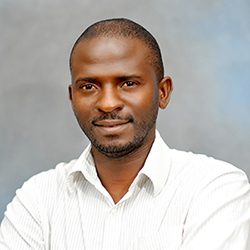
Profile AI
Harrison Lackson Tembo is a researcher affiliated with the University of Malawi, College of Medicine, in the Department of Basic Medical Sciences. His work sits at the interface of clinical research and public health, with a focused specialization in HIV epidemiology. Through rigorous study designs and collaborative partnerships, he investigates the patterns, determinants, and outcomes of HIV infection to inform evidence-based health interventions in Malawi and comparable settings.
Academic background and training
Tembo’s academic formation bridges basic medical sciences and public health, equipping him with skills in epidemiology, biostatistics, and clinical research methodologies. He engages in capacity-building efforts within his department and regional research networks, contributing to the training of students and early-career researchers in HIV-focused public health science.
Research interests
- HIV epidemiology and surveillance, including transmission dynamics and population-level burden
- Clinical outcomes of HIV care and treatment, including adherence, retention, and long-term health outcomes
- Implementation science for HIV prevention and treatment programs, including service delivery innovations and program evaluation
- Health systems strengthening, data quality, and the use of health information for policy and decision-making
- Translational research to translate epidemiologic findings into actionable public health strategies
Selected contributions and impact
Tembo contributes to generating actionable evidence to inform HIV programs, surveillance, and policy within Malawi. His work emphasizes translating research findings into practice, supporting program planning, resource allocation, and health system improvements. He collaborates with colleagues across Basic Medical Sciences and Medicine, and with national and international partners, to advance HIV epidemiology research and public health impact. He also engages in mentoring and supervising graduate students, fostering the next generation of researchers in clinical and public health science.
Future directions
He aims to expand HIV epidemiology research through innovative study designs and advanced analytics, enhance data quality and use in decision-making, and strengthen evidence-based policy development to improve prevention, care, and outcomes for authors living with HIV.
Program Impact AI
The program appears to have had a positive effect on the author’s research productivity, with publication activity beginning during enrollment after no prior output. Because graduation was not recent relative to the current year, the post-graduation publications suggest that this increased productivity continued beyond the program rather than ending with it.