
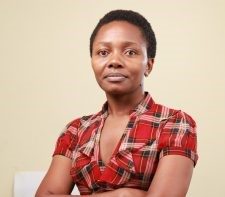
Evaline Mcharo

Lecturer University of Dar es Salaam
Tanzania Cohort 2

Profile AI

Evaline Mcharo is a Lecturer in Geography at the University of Dar es Salaam, within the Faculty of Sciences. In her teaching and research, she centers field-based epidemiology and the social determinants of health, exploring how place, environment, and social factors influence health outcomes. Her work sits at the intersection of health geography and epidemiology, with a particular focus on how social conditions shape disease patterns and well-being in real-world settings. Research focus and interests - Field-based epidemiology: designing and conducting rigorous field studies to collect health data in diverse communities. - Social determinants of health: examining how income, education, housing, employment, gender, and access to services affect health and disease. - Health geography and spatial analysis: employing geographic tools and spatial methods to map and analyze health disparities. - Community-engaged research: partnering with communities to identify health priorities and translate findings into practical interventions. - Policy-relevant health research: generating knowledge that informs planners, public health practitioners, and policymakers. Academic background Details of Evaline Mcharo’s specific degrees and training are not provided in the available information. Her role as a lecturer and her research focus reflect a trajectory anchored in geography, epidemiology, and field methods, emphasizing teaching excellence, methodological rigor, and interdisciplinary collaboration. Contributions and impact As a dedicated educator and researcher, Evaline supports undergraduate and postgraduate learning in geography, health geography, and field methods. She supervises field-based student projects and theses, mentoring the next generation of researchers in ethical community engagement, data collection, and spatial analysis. Her work contributes to advancing understanding of how social factors shape health outcomes, with an emphasis on translating insights into practice for improved health equity. Through collaborations across disciplines and with local communities, she helps build research capacity within the University of Dar es Salaam and contributes to the broader discourse on epidemiology-informed geography in Tanzania and beyond.

Program Impact AI

The author had no publications before enrolling, published once during the program, and then continued with a stronger publication record after graduation. This pattern suggests the program may have helped establish an early research foundation that supported later productivity, though the post-graduation publications likely reflect work completed with a typical publication lag.

Latest publications

Most recent scholarly works and contributions.

Loading publications…